
ASERIESOF: COMMUNITY
Le Cann
On Ritual and Rhythm: A Self-Care Conversation with Raphaëlle Robert and Guillaume Fantin
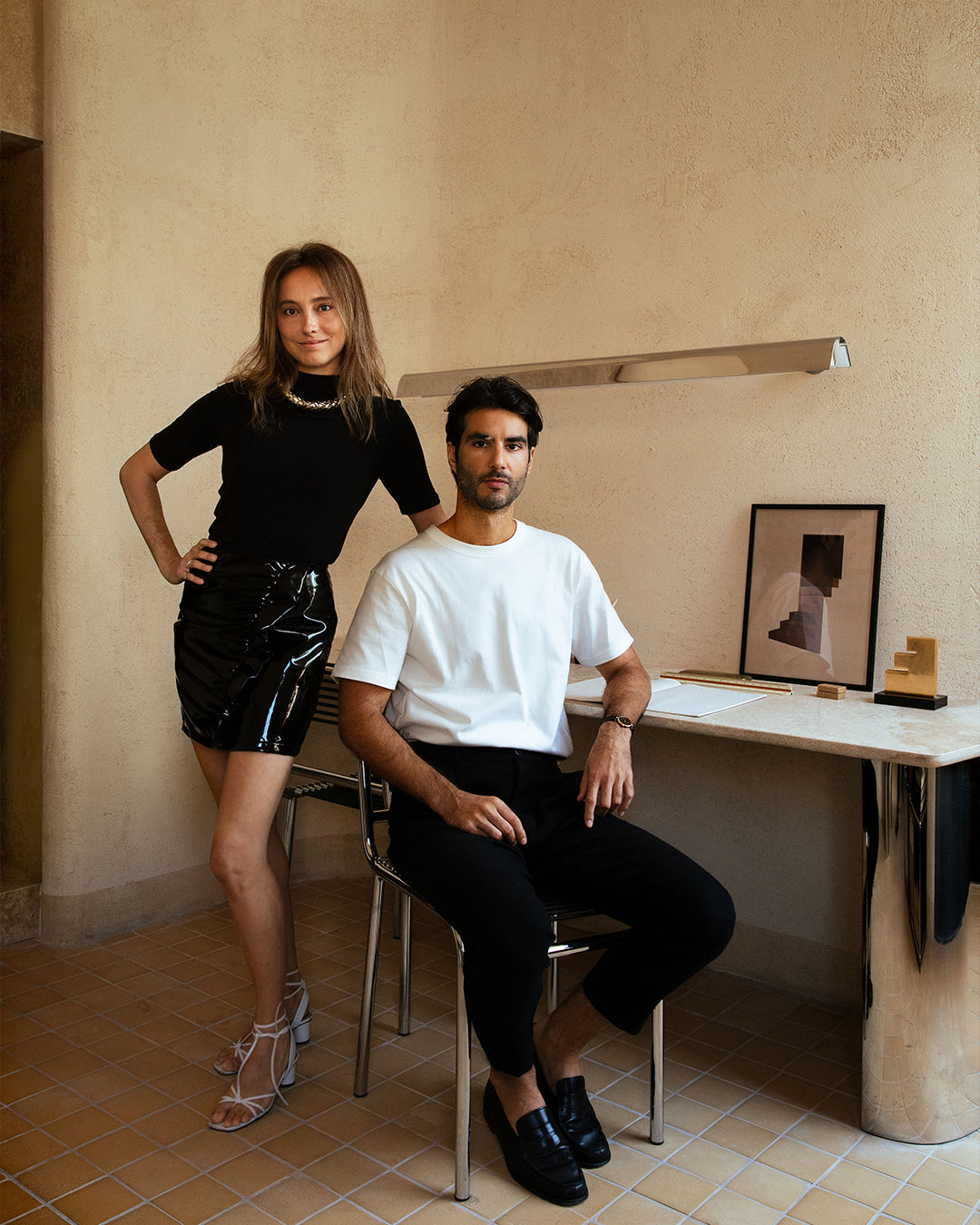
Le Cann is the Paris-based studio founded by Raphaëlle Robert and Guillaume Fantin, a duo of designers and interior architects united by a shared sensitivity for form, light, and line. Their work is characterized by quiet precision and an emotional depth grounded in drawing, where clarity of structure meets the expressive potential of texture and material.
With a practice rooted in both architectural history and contemporary culture, Le Cann creates pared-back spaces that are minimal yet warm—where references to film, fine art, and craft bring depth and resonance. Each project is shaped by their rigorous attention to detail and a belief that simplicity, when done well, is the most timeless gesture of all.
Le Cann, photo by Alice Mesguich
In this conversation, Raphaëlle Robert and Guillaume Fantin of Le Cann reflect on the personal rituals that support their creative process and emotional clarity. From quiet mornings and walks through the city to structured workdays and summer retreats, Raphaëlle Robert and Guillaume Fantin reflect on how care, rhythm, and perspective allow their practice to grow with intention.
AS: What are some self-care practices that you find most benefit your work & creative output?
RR: My body is my first tool. Activating and unwinding it each day is like switching on a machine—but one that needs ritual to function without force.
In the morning, it’s a slow choreography: hydration, self-massage to wake up my lymphatic system, sometimes a few yoga poses. Feeling physically awake is like organizing my workspace—it brings clarity and efficiency.
To start my day, I need three things: a tidy desk (like a blank page), a generous coffee (my guilty pleasure), and a podcast that stimulates my mind without overwhelming it.
At night, it’s the same ritual in reverse—a way of telling my body, “Now it’s time to power down.”
GF: As for me, I can start working straight out of bed as long as I have good coffee. I also take micro-naps after lunch, which gives my day a second wind—ideally with our cat. Nothing is more calming.
AS: In what ways do you nurture your mental and emotional health to maintain creativity and inspiration?
RR: To feed my creativity, I need to step out of the frame—literally. In Paris, I recharge by shifting perspectives: dinner with friends where laughter lightens everything, a show that challenges my eye, or a film that transports me. These shifts act like pressure valves—they clear my head of noise and refill it with new imagery.
GF: I completely agree—you need distance from work to really move forward.
RR: And when I need a full reset, I go to Brittany, to my brother’s home. The sea is like a full system reboot. Its raw energy and wide horizons remind me that creativity, like the tide, has its own flow.
“SELF-CARE IS ALSO KNOWING HOW LUCKY WE ARE TO BE DOING THIS TOGETHER.” - Guillaume Fantin
AS: What practices or routines do you incorporate into your daily life to support your work while maintaining your creative energy and mental well-being?
RR: Like our design work, I need a balance between structure and flow. Fixed rituals give me landmarks, and free time gives me space to improvise. Structure is my anchor—small routines that keep me from drifting. I need that framework for everything else to breathe. Flow comes through movement. Beneath my calm surface, I have a deep physical need: walking between meetings (Paris is perfect for that), rotating between yoga, Pilates, running or strength training. Moving is like airing out a crowded room—it clears ideas and restores balance.
GF: I go to the gym almost daily. I’ve always loved team sports, though it’s harder to fit them in these days. I miss the energy of that—but exercise keeps my circle open and my mind clear.
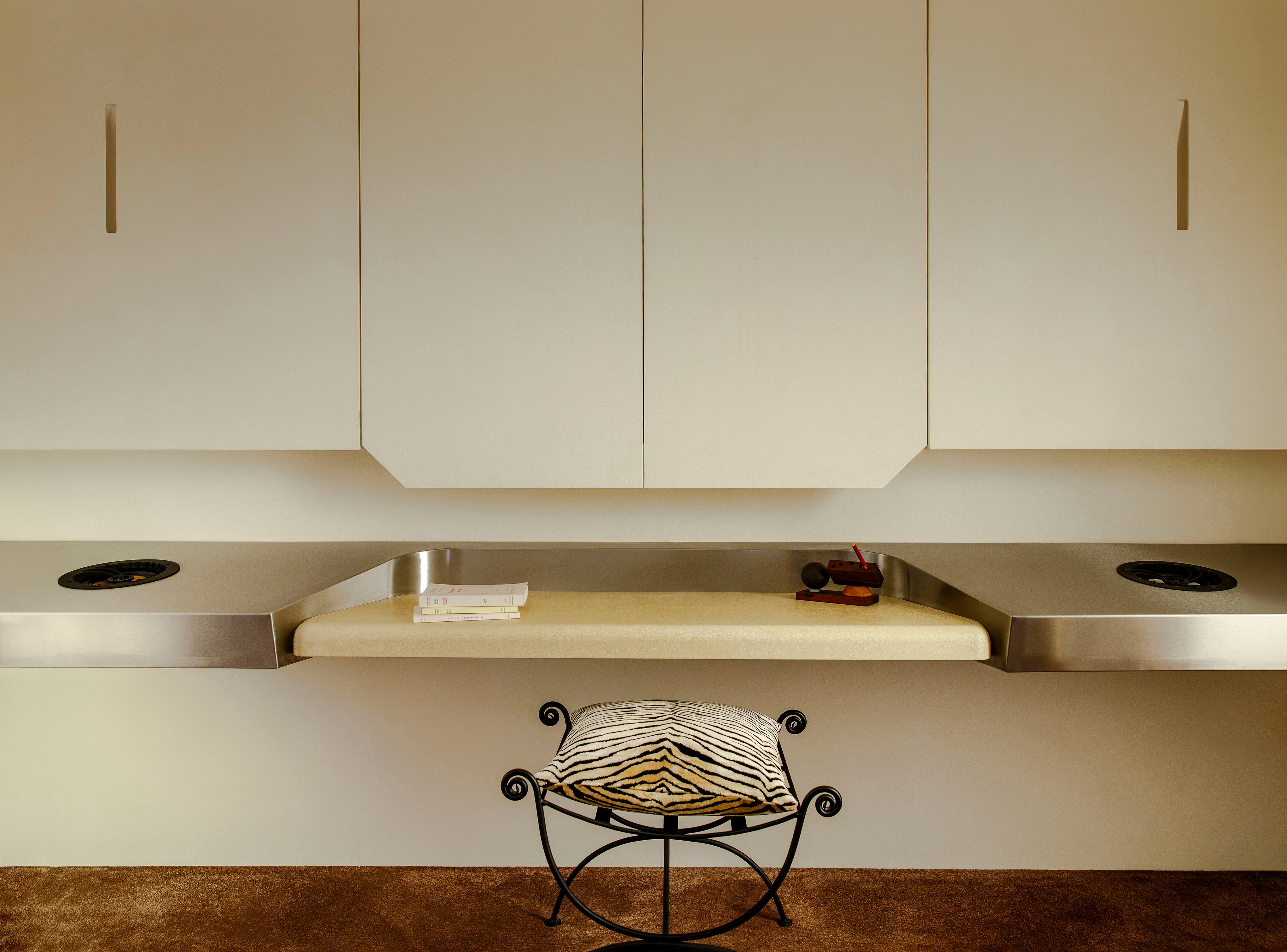
Le Cann, photo by Alice Mesguich
AS: How do you handle setbacks or challenges in your creative endeavours while still prioritizing your well-being?
RR: The purely creative part of a project is often the shortest. The rest is navigating obstacles—logistical, human, or technical. They can become black holes if left unchecked. I refuse to bury my head in the sand. I face each one head-on, because once solved, a problem loses its weight. It’s almost magical—what felt overwhelming becomes a detail, or even a lesson. I need to feel things moving forward to stay mentally light.
GF: Being two helps. We process challenges together, offering each other different views and approaches.
RR: The tougher part for me is the frustration of pure creation. Those moments are rare and so precious that I expect immediate results—but creativity moves at its own pace. There are on-days and off-days, and I’m learning, slowly, to accept that rhythm. Creation isn’t a machine—it has latency, resistance, and surprise.
AS: What specific environment or settings do you find especially conducive to both self-care and creative inspiration?
RR: My environment shifts with my creative phases. I find inspiration outside the studio—in travel, films, wandering cities, or silently communing with an exhibition. When my eye can roam freely, jumping between details, ideas begin to sprout. These mental wanderings help me visualize a project before the first sketch.
But once the idea forms, everything shifts. In the studio, it becomes a controlled storm: pulling out samples, clashing references, letting a fertile mess take over. Collaboration with Guillaume and our team pushes the project forward. Then comes the drawing phase. I need an almost ascetic space: a clear desk, structured tasks, and isolating music—usually 432Hz frequencies or electronic, depending on the energy I need. At my desk, I’m locked into the project. The space must be mastered so the mind can roam free.
GF: Since starting our studio, we’ve taken a creative retreat every summer in the south of France. It recharges us with vitamin D and gives us uninterrupted time to draw new design collections, which is rare the rest of the year. We return with empty minds and full sketchbooks.
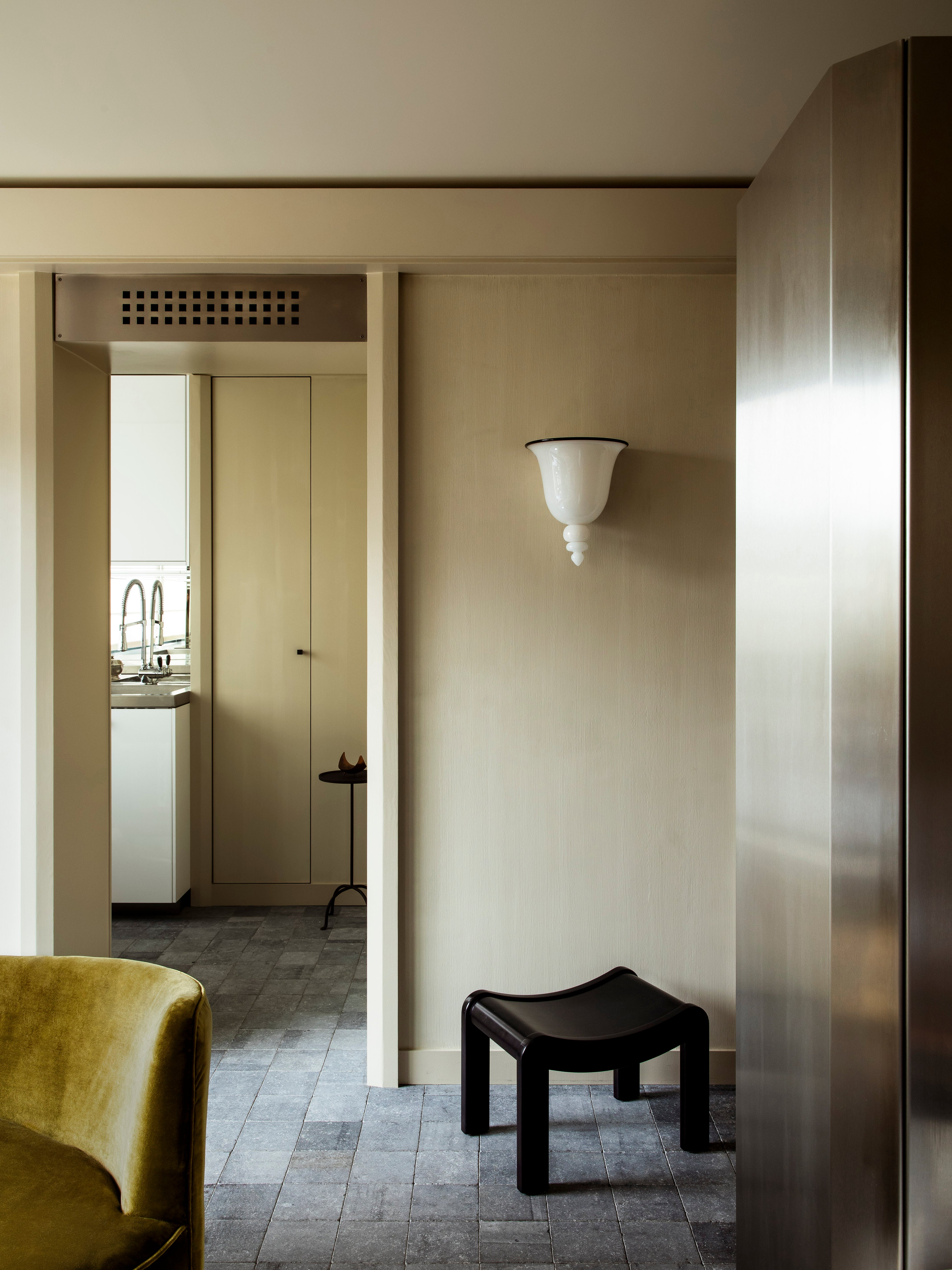
Le Cann, photo by Alice Mesguich
AS: Best self-care advice you have received?
RR: For over six years, I worked facing a big print that read: “Work hard and be nice to people.” It shaped my approach to work and to human relationships. But over time, I realized it was missing a third piece: “…and be kind to yourself.”
The high standards I set—and that we all set in this field—shouldn’t become a form of self-punishment. It’s all about balance: between rigor and softness, ambition and self-kindness.
GF: I don’t have a motto, but one truth: we’re incredibly lucky to do this work together. Sure, it’s hard, and there are challenges—but appreciating what we have is the best self-care there is.
Raphaëlle Robert & Guillaume Fantin's portrait photo by Alice Mesguich
ASeriesof All Rights Reserved.
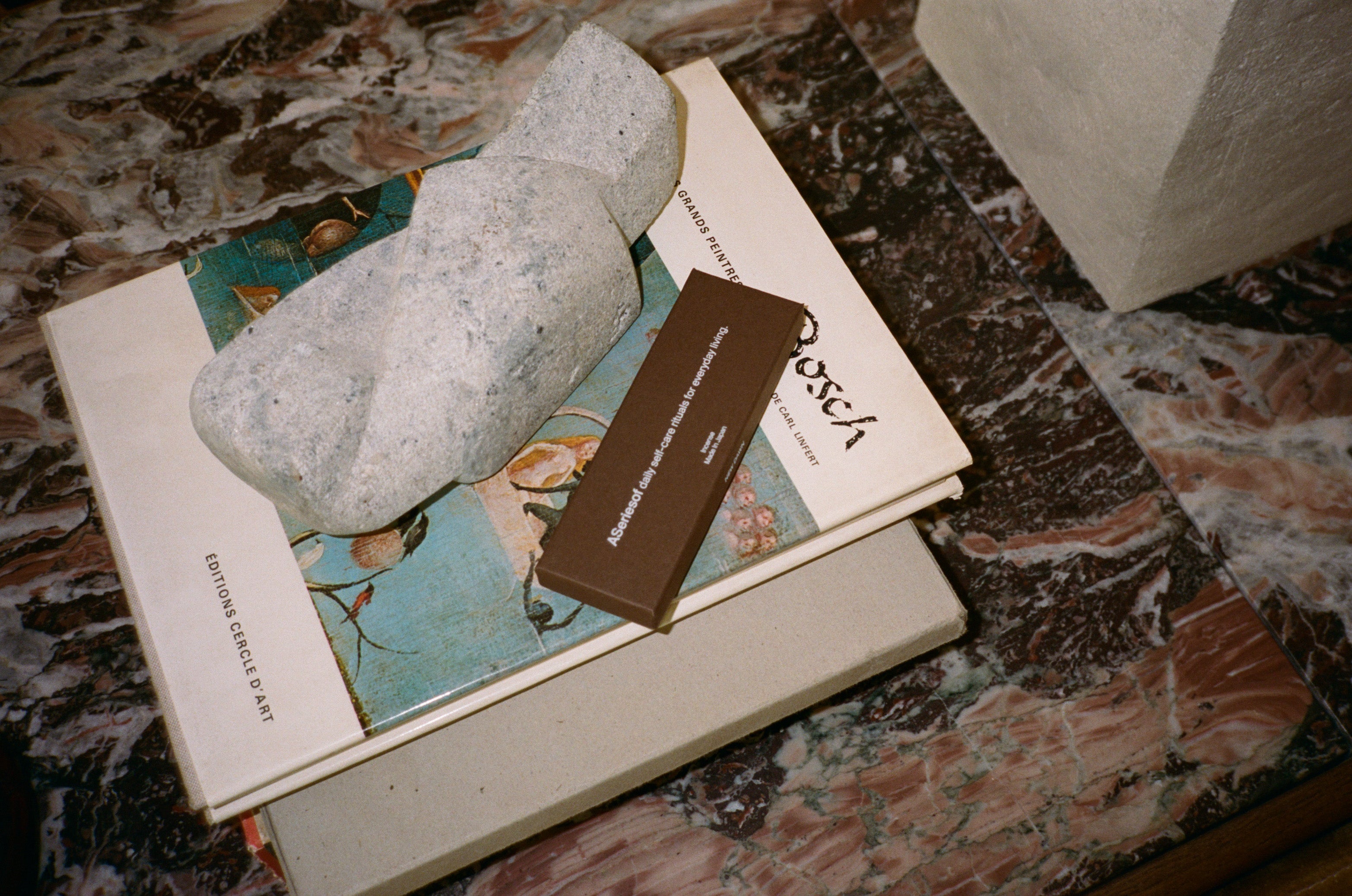
ASeriesof: incense
Home & Self-Care routines
With our incense we seek to offer a moment for relaxation and a tool to increase focus, reduce stress and anxiety, aid in sleep, and stimulate creativity.
Meet more community members:
Augusta Hoffman: Interior Designer
Augusta Hoffman, the New York–based interior designer behind quietly luminous residential interiors, reflects on the rituals that sustain her creative life. From serene studio spaces and morning fa...
Read more
Rafael de Cárdenas: Designer & Creative Director
Rafael de Cárdenas, the New York-based designer and creative director, reflects on the rituals that support his expansive creative practice. From meditation and movement to cultural immersion and t...
Read more
Massimo Adario, the Rome-based architect known for his refined and rigorous interiors, shares how morning rituals, perspective, and disciplined detachment support his creative process. In this inte...
Read more